How to Start a Dairy Farming Business: Cost, Best Breeds and Profit
Why dairy farming?
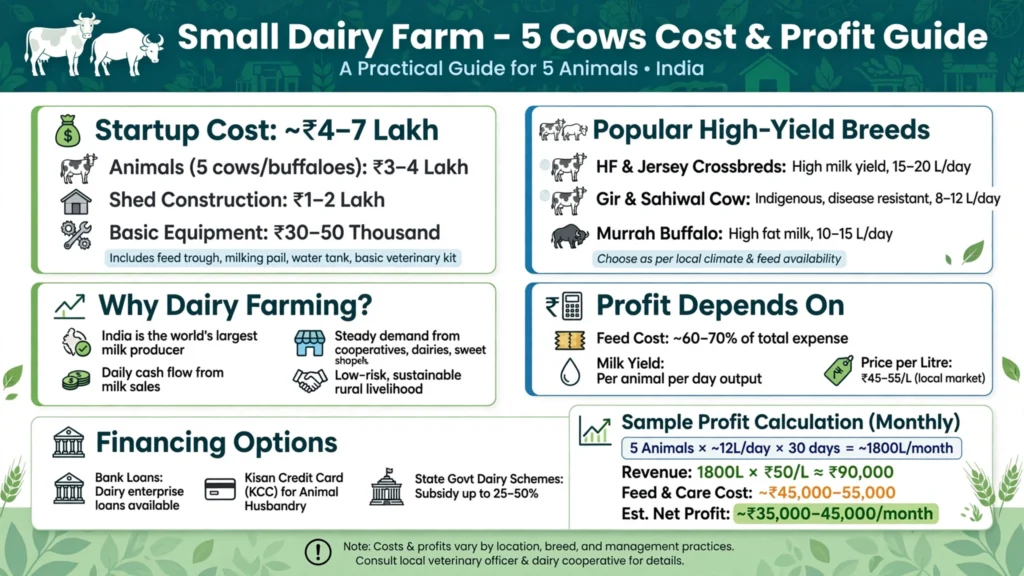
India is the world’s largest milk producer. Milk gives daily cash flow, unlike most crops, and there’s steady demand from cooperatives, private dairies, sweet shops, hotels and households. Dairy also fits well with farming: crop residue becomes fodder, and dung becomes manure or biogas.
Choosing the right breed
| Breed | Type | Typical strengths |
| HF crossbred (Holstein Friesian) | Cow (crossbred) | High milk yield; needs good feed and cooler conditions |
| Jersey crossbred | Cow (crossbred) | Good yield, higher fat than HF; adapts well |
| Gir | Indigenous cow | Hardy, disease-resistant; A2 milk demand |
| Sahiwal | Indigenous cow | One of the best indigenous milkers; heat-tolerant |
| Red Sindhi / Tharparkar | Indigenous cow | Hardy; suited to hot, dry regions |
| Murrah | Buffalo | High milk yield with high fat; good prices in many markets |
| Mehsana | Buffalo | Good yield; popular in Gujarat and nearby states |
Tip: Choose a breed that suits your climate and your buyers. If your local dairy pays by fat content, buffalo milk often earns more per litre.
Setup cost for a small dairy farm
Indicative cost for 5 milch animals:
| Item | Indicative cost (₹) |
| 5 animals (crossbred cows or Murrah buffaloes) | 2,50,000 – 4,50,000 |
| Shed (about 400–500 sq ft, simple structure) | 75,000 – 1,50,000 |
| Equipment: chaff cutter, milk cans, buckets, water troughs | 30,000 – 60,000 |
| Feed and fodder stock for the first month | 20,000 – 35,000 |
| Insurance, vet and miscellaneous | 15,000 – 30,000 |
| Total | ≈ ₹3.9 – 7.3 lakh |
A 10-animal unit costs roughly double, with some savings on the shed and equipment. Many experts advise starting with 2–5 animals, learning, and then expanding.
Step-by-step: how to start
- Get training. Contact your nearest Krishi Vigyan Kendra (KVK), state animal husbandry department or a Rural Self Employment Training Institute (RSETI) for dairy training.
- Find your buyer first. Check milk rates at the nearest village dairy cooperative, private dairy collection centre, and local hotels or sweet shops.
- Plan fodder. Feed is usually the biggest cost. Grow green fodder (like napier grass, maize or berseem) on part of your land if possible.
- Build a clean, ventilated shed with proper drainage, shade and clean drinking water.
- Buy healthy animals from trusted farms or fairs. Check milk yield yourself over two or three milkings, and ask for vaccination records.
- Insure your animals. Livestock insurance protects you against loss from death or disease.
- Register with a dairy cooperative or buyer for regular sales.
- Keep records of milk yield, feed, vet expenses and income for each animal.
Monthly profit example (5 animals)
Assumptions: 4 animals in milk at a time, 10 litres per animal per day, ₹40 per litre (actual rates vary by fat content and region).
| Item | Monthly amount (₹) |
| Milk: 4 × 10 litres × 30 days × ₹40 | 48,000 |
| Feed and fodder | (22,000) |
| Labour (if hired, part-time) | (6,000) |
| Vet, medicines, insurance, electricity | (3,000) |
| Net income (before loan EMI) | ≈ 17,000 |
Dung sold as manure or used for biogas, and calves raised for sale, add extra income. Profit is higher when you grow your own fodder and do the work with family labour.
Loans and government support
- Bank loans: most banks offer dairy loans for animal purchase and sheds, often against a project report. NABARD-supported refinance helps banks lend for dairy.
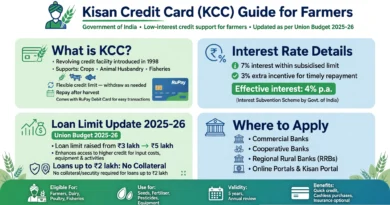
- Kisan Credit Card (KCC) for animal husbandry: working capital for feed, medicine and labour, at concessional interest within the eligible limit.
- Rashtriya Gokul Mission: focuses on improving indigenous breeds. It includes support for setting up breed multiplication farms, which suits larger entrepreneurs.
- Animal Husbandry Infrastructure Development Fund (AHIDF): interest subvention for dairy processing and infrastructure projects, for entrepreneurs and companies.
- State schemes: many states give subsidies on animal purchase or sheds, especially for women, SC/ST and small farmers. Ask your district animal husbandry office.
- Dairy cooperatives: members often get subsidised feed, vet services and artificial insemination.
Common mistakes to avoid
- Buying high-yield animals without enough good feed to support them
- Not having a fixed buyer for the milk
- Ignoring vaccination and deworming schedules
- Poor shed hygiene, which leads to mastitis and lower yield
- Not keeping records, so you can’t tell which animals are profitable
Frequently asked questions
How much investment is needed to start a dairy farm?
Roughly ₹4–7 lakh for 5 animals, including the shed and equipment. It can be lower if you already have space and start with fewer animals.
Which cow gives the most milk in India?
HF crossbreds usually give the highest yields with good care. Among indigenous breeds, Sahiwal and Gir are among the best milkers.
Is dairy farming profitable in India?
It can be, especially when you control feed costs, keep healthy animals, and have a reliable buyer. Profit margins depend heavily on fodder and milk prices.
Can I get a loan for a dairy farm?
Yes. Banks offer dairy loans, and you can use a Kisan Credit Card for working capital. Check state schemes for subsidies.
Cow or buffalo: which is better?
Buffalo milk has higher fat and often fetches a higher price per litre. Crossbred cows often give more litres. Choose based on your market and climate.
Sources (checked 28 October 2026)
- Department of Animal Husbandry and Dairying: dahd.gov.in
- NABARD: nabard.org
Scheme benefits change and differ by state. Confirm with your district animal husbandry office or bank before applying.
Suggested internal links: Rural business ideas and government schemes · How to start an FPO · Food processing business ideas for rural India