How Self-Help Groups (SHGs) Are Helping Rural Women Start Businesses in India
Self-Help Groups have quietly become one of the largest engines of women’s economic participation in rural India — over 10 crore women are now part of SHGs under the government’s DAY-NRLM programme, with more than ₹12 lakh crore in loans disbursed to date. If you’re a woman looking to start a small business but don’t want to go it entirely alone, an SHG may be the most accessible starting point available.
What an SHG Actually Is
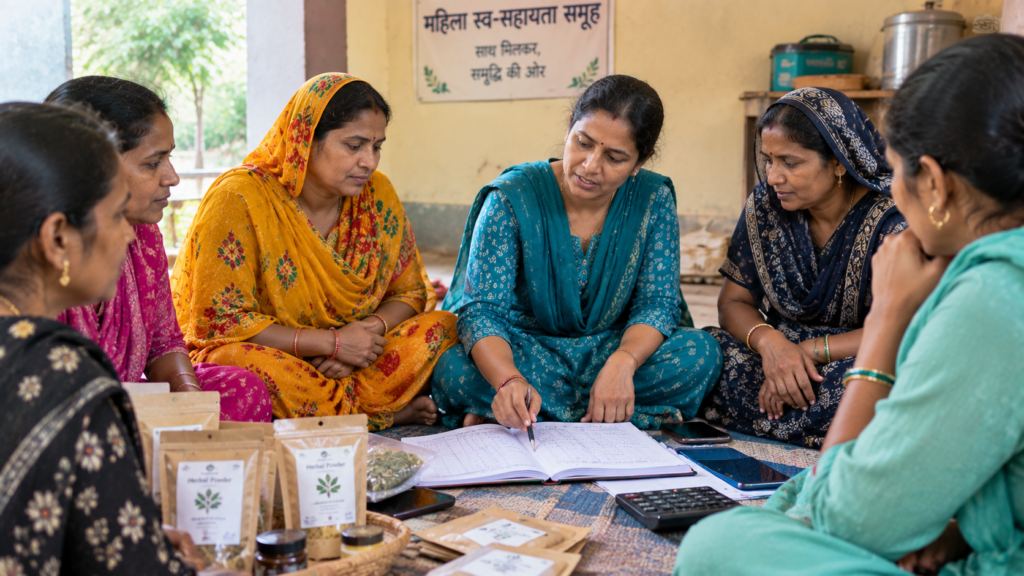
A Self-Help Group is a small group of women (typically neighbours or members of the same community) who pool small, regular savings together and then lend from that pool to members for personal or business needs. Over time, a well-run SHG builds a credit history as a group, which then qualifies it for bank loans at more favourable terms than an individual with no credit history could access alone.
The DAY-NRLM Programme
The Deendayal Antyodaya Yojana – National Rural Livelihoods Mission (DAY-NRLM) is the central government’s framework supporting SHGs nationwide, with over ₹12 lakh crore in loans disbursed to women’s SHGs and a stated goal of creating 3 crore ‘Lakhpati Didis’ — women earning at least ₹1 lakh a year through their SHG-linked livelihood activities. An additional ₹8 lakh crore has been allocated toward infrastructure and training under the programme, alongside plans for individual loan access and Saras Melas — organised marketplaces — to help SHG members sell their products directly.
How to Join or Start One
Most rural and semi-urban areas already have active SHGs supported by the local Gram Panchayat or a state rural livelihoods mission office — that’s the fastest way in, since joining an established group with a savings and repayment track record is usually easier than starting from scratch. If none exists nearby, groups are generally formed with a small number of women from the same community who commit to regular savings; your local block or district rural development office can guide you through formal registration and bank linkage.
What Kinds of Businesses SHGs Typically Fund
Common SHG-funded ventures include tailoring and textile units, food processing and packaged snacks, dairy and livestock rearing, handicrafts, and small retail. The group structure itself is often as valuable as the funding — shared knowledge, collective bargaining power when buying raw materials, and a support system for members navigating a first business.
Frequently Asked Questions
How many women are part of SHGs in India?
Over 10 crore women currently participate in Self-Help Groups under the DAY-NRLM programme, with more than ₹12 lakh crore in loans disbursed to them to date.
Do I need to start a new SHG, or can I join an existing one?
Joining an existing, established SHG in your area is usually easier, since it already has a savings and repayment history that helps with bank loan access. Your local Gram Panchayat or rural livelihoods mission office can help you find one.
What does ‘Lakhpati Didi’ mean?
It refers to the government’s goal of helping 3 crore women SHG members earn at least ₹1 lakh annually through their SHG-linked business or livelihood activity, a key target under the DAY-NRLM programme.