
State Government Business Subsidies Most People Don’t Know About
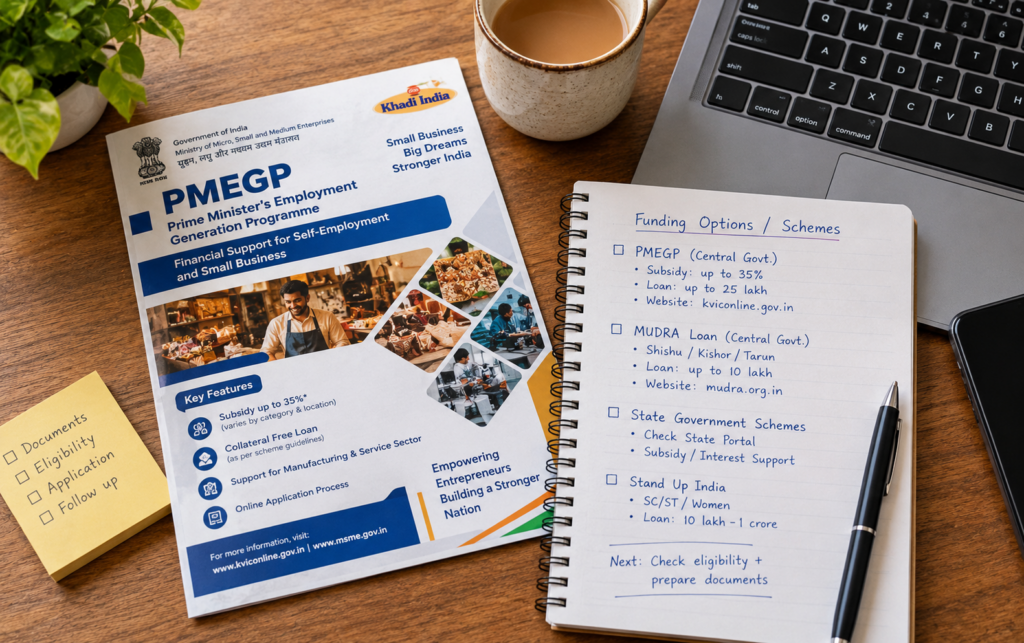
Central schemes like PMEGP and Mudra get most of the attention, but almost every Indian state also runs its own startup and MSME policy — often stacking on top of central benefits rather than replacing them. If you haven’t checked your state’s policy yet, you may be leaving funding on the table.
Why State Schemes Are Worth Checking
State policies are usually designed to attract businesses and jobs to that specific state, so they often include benefits central schemes don’t: capital subsidies, stamp duty exemptions on property, interest subvention on loans, and in some cases direct seed funding for recognised startups registered in that state.
Examples of What States Are Offering
Maharashtra runs a dedicated state startup policy focused on incubation support and seed funding access for startups registered in the state. Several states, including Karnataka, Telangana and Delhi, maintain their own updated startup policies with sector-specific incentives. Many states also run schemes targeted at young or first-time entrepreneurs specifically — worth searching for by name alongside your state, since these often have simpler eligibility than central schemes.
Because these policies change and get renamed periodically, the most reliable approach is to search ‘[your state] startup policy’ or check the state-specific policy pages listed on the official Startup India portal, rather than relying on older blog posts that may reference an outdated scheme name.
How to Actually Use a State Scheme
Start with your state’s Department of Industries or MSME portal — most now have a dedicated single-window clearance system for registrations and subsidy applications. Check specifically for: capital or interest subsidy for MSMEs, stamp duty exemption on your business premises, and any state-specific startup fund that requires DPIIT recognition as a prerequisite (which is one more reason DPIIT registration is worth doing early).
It’s common — and usually allowed — to combine a state subsidy with a central scheme like PMEGP for the same project, since they typically cover different cost components (state subsidy on land/stamp duty, central subsidy on the core project cost). Always confirm this with your bank or the scheme office before assuming it, since rules vary.
Frequently Asked Questions
Can I apply for both a state subsidy and a central scheme like PMEGP?
Often yes, since they typically cover different cost components — but this varies by state and scheme, so confirm with your bank or the relevant scheme office before finalising your funding plan.
Where do I find my state’s current startup policy?
Check the state-specific policy pages on the official Startup India portal (startupindia.gov.in) or your state’s Department of Industries website, since policy names and benefits are updated periodically.
Do I need DPIIT recognition to access state benefits?
Some state-specific startup funds require it as a prerequisite, though general MSME subsidies (capital subsidy, stamp duty exemption) often don’t. Check the specific eligibility criteria for the scheme you’re targeting.