The Amul Story: What Small Producers Can Learn From India’s Cooperative Model
How Amul began
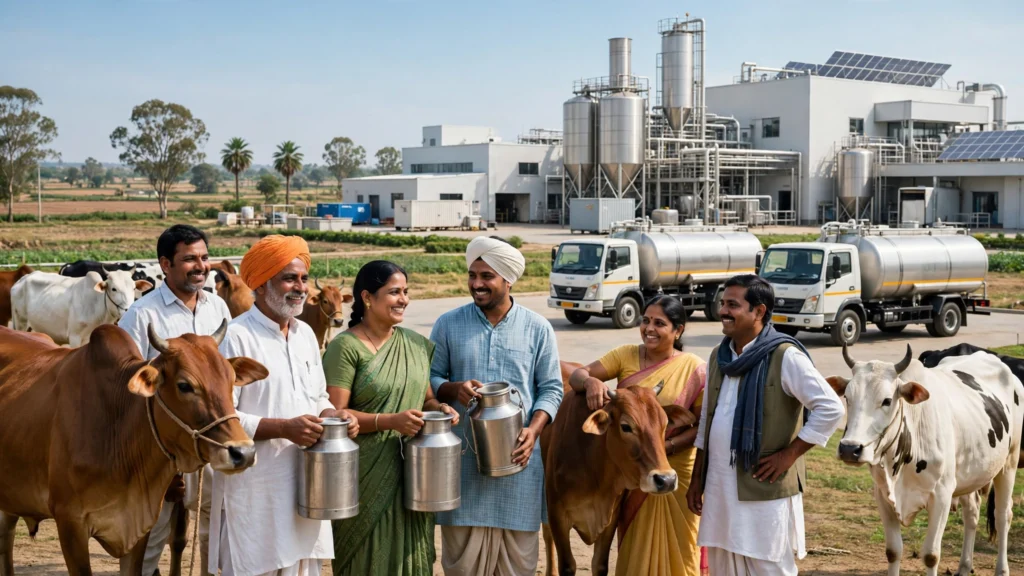
In the 1940s, dairy farmers around Anand in Gujarat sold milk to a private dairy that controlled prices. Farmers got very little, and they had no bargaining power.
Inspired by Sardar Vallabhbhai Patel’s advice, and led locally by Tribhuvandas Patel, the farmers formed the Kaira District Cooperative Milk Producers’ Union in 1946. They decided to collect and process their own milk.
A young engineer, Dr Verghese Kurien, joined in the late 1940s. He helped build the dairy’s technology, including processing buffalo milk into milk powder. He went on to lead the cooperative movement, and Amul’s model became the base for Operation Flood, which helped make India the world’s largest milk producer.
The “Anand pattern”: a three-tier model
| Level | Who | Role |
| Village dairy cooperative society | Farmers in a village | Collects milk twice a day, tests quality, pays farmers |
| District milk union | All village societies in a district | Processes milk, makes products, provides cattle feed and vet services |
| State federation (GCMMF) | All district unions | Markets products under the Amul brand across India and abroad |
Farmers own every level. Profits go back to them, not to outside shareholders.
Amul today (key numbers)
| Metric | Figure |
| Amul brand turnover, FY 2025-26 | Above ₹1 lakh crore (11% growth) |
| GCMMF sales turnover, FY 2025-26 | ₹73,450 crore (up from ₹65,911 crore in FY 2024-25) |
| Farmer members | About 36 lakh dairy farmers |
| Member unions | 18 district cooperative unions |
7 lessons for small producers, FPOs and entrepreneurs
1. Remove the middleman by owning the value chain
Amul farmers didn’t just produce milk. They took control of collection, processing and selling. Small producers can earn more by moving even one step up the chain, for example by packaging, grading or selling directly.
2. Strength comes from aggregation
One farmer with two buffaloes has no bargaining power. Lakhs of farmers together have huge power. This is the idea behind Farmer Producer Organisations (FPOs) and Self-Help Groups.
3. Pay fairly, transparently and fast
Village societies test fat content and pay farmers based on quality, quickly and openly. Trust and regular payments kept farmers loyal for decades.
4. Build one strong brand
Instead of many small local labels, the unions sell under one brand: Amul. That gave it national recognition and the money to advertise.
5. Marketing can be simple and memorable
The Amul girl ads have been running since the 1960s, with witty takes on current events. Consistency and personality made the brand loved, without celebrity endorsements.
6. Keep products affordable for the masses
Amul focuses on everyday products at accessible prices, sold through a huge distribution network. Volume, not premium pricing, drives growth.
7. Invest in the producer, not just the product
Amul’s unions provide cattle feed, veterinary care, artificial insemination and training. When producers become more productive, the whole system grows.
Can the Amul model work for other businesses?
Yes, in many sectors. The same idea (small producers pooling together, owning processing and building a brand) applies to:
- Vegetable and fruit growers forming FPOs
- Women’s SHGs making pickles, papad or spices
- Artisan groups selling handicrafts
- Fishers’ cooperatives
Lijjat Papad, another famous cooperative, followed a similar path with women’s papad making.
Frequently asked questions
Who founded Amul?
Amul began in 1946 as the Kaira District Cooperative Milk Producers’ Union, led by Tribhuvandas Patel, with guidance from Sardar Vallabhbhai Patel. Dr Verghese Kurien led its growth and the national cooperative dairy movement.
What is Amul’s turnover?
In FY 2025-26, the Amul brand’s turnover crossed ₹1 lakh crore, and GCMMF reported sales of ₹73,450 crore.
Who owns Amul?
Amul is owned by about 36 lakh dairy farmers through village cooperatives, district unions and the Gujarat Cooperative Milk Marketing Federation (GCMMF).
What is the Anand pattern?
It’s Amul’s three-tier cooperative model of village societies, district unions and a state federation, all owned by farmers.
What is the full form of Amul?
Amul is popularly said to stand for “Anand Milk Union Limited”. The name also comes from the Sanskrit word “amulya”, meaning priceless.
Sources (checked 28 October 2026)
- AgroSpectrum India, “Amul’s turnover tops Rs 1 lakh crore, driven by scale and farmer network”, April 2026
- Storyboard18, GCMMF FY25 turnover report
- Amul / GCMMF official website: amul.com
Suggested internal links: How to start an FPO · Indian entrepreneurs who started small · Tier-2 and Tier-3 entrepreneurs building big brands