How Lijjat Papad Grew From ₹80 Into a National Women’s Cooperative
The beginning: seven women and ₹80
In 1959, seven women living in a building in Girgaon, Mumbai, wanted to earn a living using a skill they already had: cooking. With ₹80 borrowed from Chhaganlal Karamsi Parekh (fondly known as “Chhaganbapa”), a social worker of the Servants of India Society, they bought ingredients and the equipment needed to make papad.
The founders were Jaswantiben Jamnadas Popat, Parvatiben Ramdas Thodani, Ujamben Narandas Kundalia, Banuben N. Tanna, Laguben Amritlal Gokani, Jayaben V. Vithalani and Diwaliben Lukka.
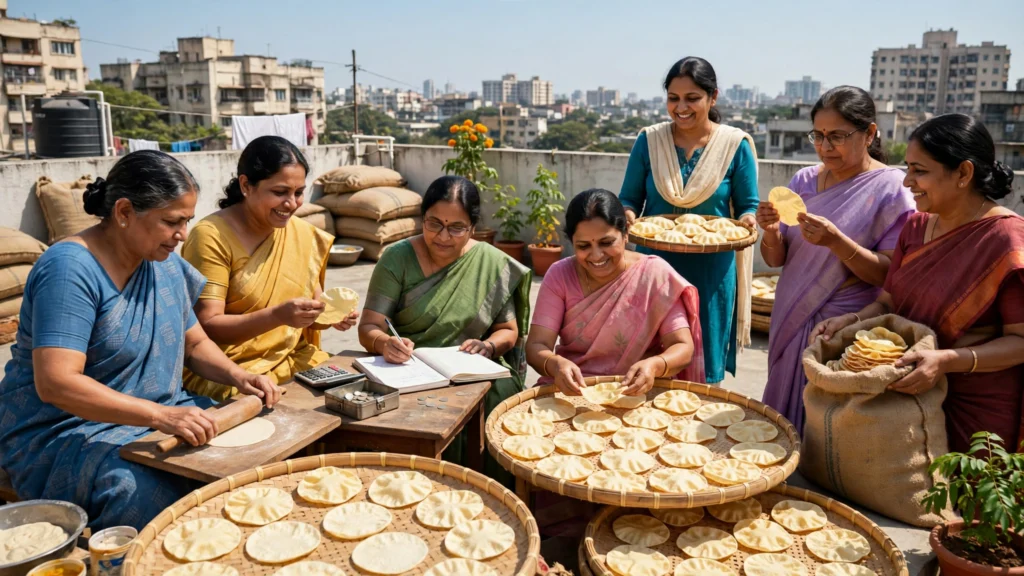
They started small, making papad on the terrace of their building and selling it to local merchants.
The early decisions that shaped Lijjat
Chhaganbapa gave them advice that became the foundation of the organisation:
- Never compromise on quality. Make one standard papad, and make it the same way every time.
- Run it as a business, not charity. They refused donations and outside help, even when they made losses.
- Keep proper accounts. Simple, honest bookkeeping from day one.
How the Lijjat model works
| Feature | How it works |
| Ownership | Only women can be members, and every working member is a co-owner (called “sister”) |
| Work model | Members collect pre-mixed dough from the branch, roll papad at home and return them for quality checks |
| Pay | Members are paid daily for their work, which gives regular income |
| Profit sharing | Profits and losses are shared equally among members of a branch |
| Decisions | Taken by consensus; members can object to decisions |
| Management | A managing committee elected by members runs the organisation |
| Men | Can work only as salaried employees, not as members |
Lijjat today
| Metric | Figure |
| Members | About 45,000 women (2021) |
| Branches | Over 80 branches in many states |
| Turnover | About ₹1,600 crore (reported in 2019) |
| Exports | To 25+ countries, through merchant exporters |
Lijjat also sells other products, including khakhra, masala, wheat flour, chapatis and detergent. In 2021, co-founder Jaswantiben Jamnadas Popat was honoured with the Padma Shri.
7 business lessons from Lijjat Papad
1. Start with a skill you already have
The founders didn’t learn a new trade. They turned a household skill into a product. Many of the best small businesses start the same way.
2. Quality is your brand
The same taste, every time, built trust over decades. For food businesses especially, consistency matters more than fancy branding.
3. Small capital can be enough if you’re disciplined
₹80 was enough to begin because they reinvested earnings and kept costs low.
4. Self-reliance builds strength
Refusing donations forced Lijjat to become profitable and kept its independence.
5. Flexible work brings in more people
Rolling papad at home let women earn without leaving family responsibilities. Flexible models can unlock a large, motivated workforce.
6. Fairness keeps people loyal
Equal ownership and profit sharing gave every member a stake in quality and success.
7. Simple systems scale
A standard process (central dough preparation, home rolling, central quality checks and packing) could be copied branch after branch.
How women’s groups can apply these lessons today
- Choose one product your group can make well, such as pickles, papad, masala or snacks.
- Get FSSAI registration and maintain hygiene and quality.
- Fix standard recipes and quality checks.
- Share earnings transparently.
- Sell through local shops, exhibitions, WhatsApp and online platforms.
See our guide on how SHGs are helping rural women start businesses.
Frequently asked questions
Who started Lijjat Papad?
Seven Gujarati women in Mumbai: Jaswantiben Jamnadas Popat, Parvatiben Ramdas Thodani, Ujamben Narandas Kundalia, Banuben N. Tanna, Laguben Amritlal Gokani, Jayaben V. Vithalani and Diwaliben Lukka.
When was Lijjat Papad founded?
On 15 March 1959, in Mumbai.
How much money did Lijjat Papad start with?
₹80, borrowed from social worker Chhaganlal Karamsi Parekh.
How many women work at Lijjat?
About 45,000 women members, according to 2021 figures.
What is the turnover of Lijjat Papad?
It was reported at around ₹1,600 crore in 2019.
Is Lijjat Papad a cooperative?
Yes. It’s a women’s cooperative where working members are co-owners and share profits and losses.
Sources (checked 28 October 2026)
- Wikipedia, “Shri Mahila Griha Udyog Lijjat Papad” (founding, founders, membership, turnover and model)
- Lijjat official website: lijjat.com
Turnover and membership figures are the latest widely reported numbers. Check with Lijjat for current figures before publishing.
Suggested internal links: How SHGs are helping rural women · 10 business ideas for women entrepreneurs · Indian entrepreneurs who started small