Business Loans for Women in India: Best Government Schemes and Bank Options
Why women entrepreneurs often struggle to get loans
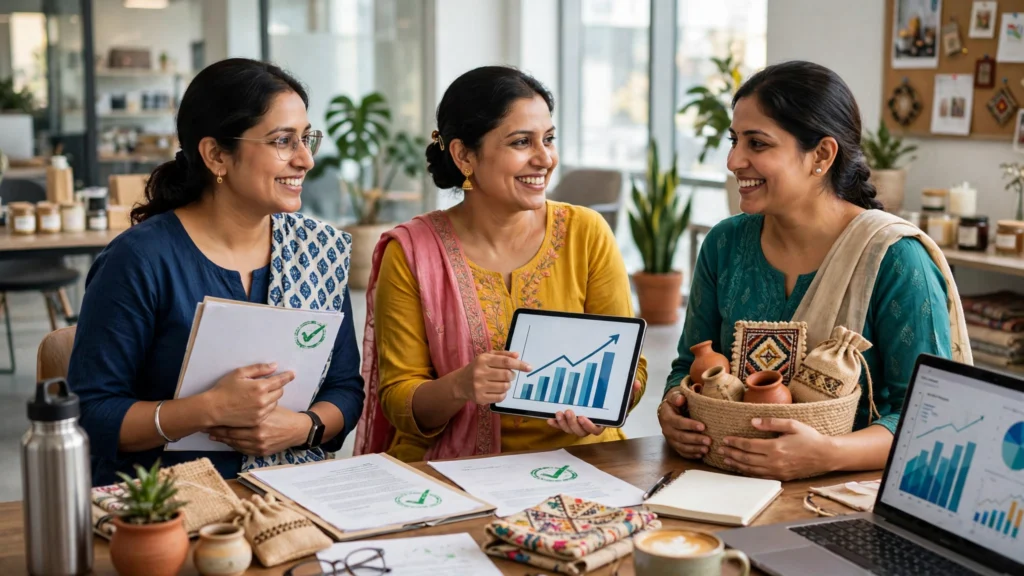
Many women founders face the same hurdles: no property in their name to offer as collateral, little credit history, and businesses that start small or at home. Government schemes try to solve this with collateral-free loans, credit guarantees and subsidies.
Main loan schemes for women at a glance
| Scheme | Loan amount | Key benefit for women | Best for |
| PM Mudra Yojana (PMMY) | Up to ₹20 lakh | No collateral; most Mudra borrowers are women | Small and micro businesses, new or existing |
| Stand-Up India | ₹10 lakh to ₹1 crore | At least one woman borrower per bank branch targeted | New (greenfield) manufacturing, services, trading or agri-allied ventures |
| PMEGP | Project up to ₹50 lakh (manufacturing) or ₹20 lakh (service) | Higher margin-money subsidy for women (special category) | New micro enterprises |
| CGTMSE-backed loans | Varies by lender | Collateral-free; guarantee cover can be higher for women-owned units | Micro and small enterprises |
| DAY-NRLM / SHG bank linkage | Group-based loans | Credit for rural women through Self-Help Groups | Rural women and SHG members |
| Bank and NBFC women-entrepreneur products | Varies | Concessions on interest or processing fees at some lenders | Women with growing businesses |
1. PM Mudra Yojana
Mudra loans are given by banks, NBFCs and microfinance institutions to non-farm micro and small businesses, without collateral.
| Category | Loan amount |
| Shishu | Up to ₹50,000 |
| Kishor | ₹50,000 to ₹5 lakh |
| Tarun | ₹5 lakh to ₹10 lakh |
| Tarun Plus | ₹10 lakh to ₹20 lakh (for those who have successfully repaid a Tarun loan) |
Good for: boutiques, beauty parlours, tiffin services, small shops, home manufacturing, tailoring and service businesses.
2. Stand-Up India
Stand-Up India supports loans of ₹10 lakh to ₹1 crore for setting up a new enterprise. It covers manufacturing, services, trading and agri-allied activities, and is meant for women and SC/ST entrepreneurs. Applications can be made through the Stand-Up India portal (standupmitra.in) or directly at bank branches.
Check the current status and terms of the scheme with your bank before applying, since scheme periods are extended or revised from time to time.
3. PMEGP (Prime Minister’s Employment Generation Programme)
PMEGP combines a bank loan with a margin-money (capital) subsidy for new micro enterprises. Women fall under the “special category”, which gets a higher subsidy and a lower own contribution than the general category.
Important update: In a reply to Parliament reported in August 2026, the government said PMEGP was approved up to 31 March 2026 and that continuation for the next five years was under consideration. Check the latest status on the KVIC PMEGP portal (kviconline.gov.in) before you apply.
4. CGTMSE collateral-free loans
The Credit Guarantee Fund Trust for Micro and Small Enterprises gives lenders a guarantee, so they can lend to micro and small enterprises without collateral. Women-owned businesses usually get better guarantee cover. Ask your bank whether your loan can be covered under CGTMSE.
5. Self-Help Groups and DAY-NRLM
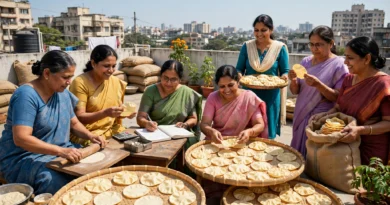
Rural women can join or form Self-Help Groups (SHGs) under the Deendayal Antyodaya Yojana – National Rural Livelihoods Mission. SHGs save together, lend internally and get bank loans at the group level. This is often the easiest first step to credit for women with no credit history. Read more about how SHGs are helping rural women start businesses.
6. New scheme announced for first-time women entrepreneurs
The Union Budget 2025-26 announced a scheme to give term loans of up to ₹2 crore to 5 lakh first-time women, SC and ST entrepreneurs, along with entrepreneurship and managerial training. Check the Ministry of MSME website or your bank for its current status and how to apply.
Documents usually needed
- Aadhaar and PAN of the applicant
- Business proof: Udyam registration, GST registration or shop licence
- Bank statements (usually 6–12 months)
- Business plan or project report (for new businesses)
- Income tax returns (for existing businesses)
- Address proof of the business
- Quotations for machinery or equipment (if buying)
- Caste certificate (where relevant for Stand-Up India or other schemes)
Tips to get your loan approved
- Register your business. A free Udyam registration and GST (if applicable) make you more credible.
- Open a separate business bank account and route all business payments through it.
- Check and build your credit score before applying.
- Prepare a simple, realistic project report: costs, expected sales, monthly expenses and how you’ll repay.
- Start small. A successful repayment of a smaller loan makes the next, larger loan easier.
- Avoid agents who charge to “guarantee” loans. Apply directly through banks or official portals.
Frequently asked questions
Which is the best government loan scheme for women in India?
It depends on your need. Mudra suits small businesses needing up to ₹20 lakh without collateral. Stand-Up India suits larger new ventures from ₹10 lakh to ₹1 crore. PMEGP suits new micro enterprises that want a capital subsidy.
Can a woman get a business loan without collateral?
Yes. Mudra loans and loans covered by CGTMSE don’t require collateral.
Can a housewife get a business loan?
Yes. A homemaker starting a business can apply for Mudra or other schemes with a business plan, KYC documents and a bank account. Joining an SHG can also help.
Do women get lower interest rates on business loans?
Some banks and NBFCs offer small concessions on interest or processing fees for women. Compare offers before choosing.
How long does loan approval take?
It varies by bank and loan size, from a few days for small loans to several weeks for larger project loans.
Sources (checked 28 October 2026)
- Pradhan Mantri Mudra Yojana: mudra.org.in
- Stand-Up India portal: standupmitra.in
- KVIC PMEGP portal: kviconline.gov.in; PMEGP status as reported by Kashmir Life, 3 August 2026
- CGTMSE: cgtmse.in
- Union Budget 2025-26 announcement on term loans for first-time women, SC and ST entrepreneurs
Suggested internal links: PMEGP vs Mudra vs Stand-Up India · 10 business ideas for women entrepreneurs · How SHGs are helping rural women