How to Start a Boutique Business From Home: Cost, Setup and Marketing
Why a home boutique works
Women’s ethnic wear, custom blouses, kurtis and occasion wear have steady demand across Indian cities and towns, especially during weddings and festivals. A home boutique keeps rent low and lets you balance work with family. If you already know tailoring or have an eye for fashion, it’s a natural business to start.
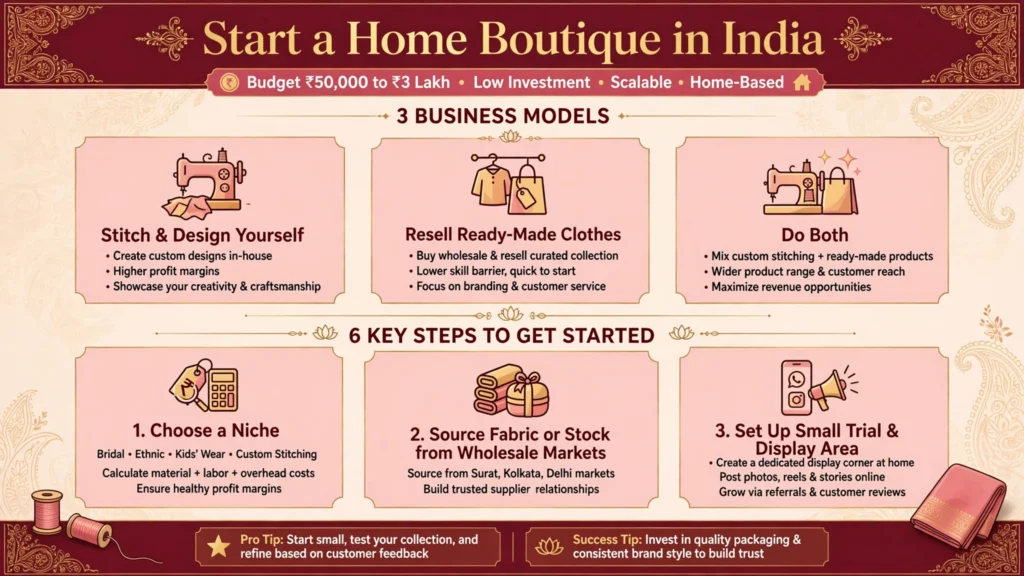
Step 1: Choose your boutique model
| Model | What you do | Investment | Best for |
| Custom stitching | Stitch blouses, suits and lehengas to measure | Low to moderate | Women with tailoring skills |
| Designer boutique | Design and get outfits made by karigars | Moderate | Women with design sense and contacts |
| Reselling | Buy ready-made kurtis, sarees and suits wholesale and sell | Low to moderate | Beginners who want to start fast |
| Mixed | Reselling plus alterations and custom orders | Moderate | Growing boutiques |
Step 2: Pick a niche
A clear niche helps you stand out:
- Designer blouses and bridal wear
- Daily-wear cotton kurtis for working women
- Plus-size ethnic wear
- Kids’ ethnic wear for festivals
- Handloom and sustainable fashion
Step 3: Plan your setup and budget
Indicative costs for a small home boutique:
| Item | Indicative cost (₹) |
| Sewing machine(s) (if stitching) | 8,000 – 40,000 |
| Cutting table, iron, tools | 5,000 – 15,000 |
| Display racks, mirror, trial area | 10,000 – 40,000 |
| Initial fabric or ready-made stock | 25,000 – 1,50,000 |
| Branding: name, logo, labels, bags | 5,000 – 20,000 |
| Photos and social media setup | 0 – 15,000 |
| Working capital (karigar wages, small expenses) | 10,000 – 50,000 |
| Total | roughly ₹50,000 – ₹3 lakh |
Tip: start with a small, well-chosen stock and take pre-orders, rather than filling racks with unsold items.
Step 4: Source smartly
- Wholesale markets: many cities have well-known textile and wholesale markets. Visit, compare prices and build relationships with 2–3 trusted suppliers.
- Manufacturers and weavers: for handloom or sarees, buying closer to the source can improve margins.
- Online B2B platforms: useful for comparing prices and finding suppliers. Order samples first.
- Karigars (tailors and embroiderers): find reliable artisans for bulk or complex work. Agree prices and timelines in advance.
Step 5: Price for profit
Price = Fabric or stock cost + Stitching or karigar cost + Accessories + Packaging + Your profit margin
| Example: designer blouse | Amount (₹) |
| Fabric and lining | 400 |
| Stitching and embroidery | 600 |
| Hooks, tassels, packaging | 100 |
| Total cost | 1,100 |
| Profit margin (40%) | 440 |
| Selling price | about ₹1,550 |
Boutiques often work on higher margins than regular shops because of design and personal service. Keep your prices consistent and avoid heavy discounting.
Step 6: Register your business
- Udyam registration (free) for MSME recognition. See our Udyam guide.
- GST registration when your turnover crosses the threshold, or if you sell through online marketplaces. See our GST registration guide.
- A separate bank account for your business.
- Check any local rules for running a business from home.
Step 7: Market your boutique
- WhatsApp Business: create a catalogue, use broadcast lists and status updates for new arrivals. Read our WhatsApp marketing guide.
- Instagram: post reels of outfit try-ons, fabric close-ups and customer stories. Consistency matters more than perfection.
- Google Business Profile: helps local customers find “boutique near me”. See our Google Business Profile guide.
- Exhibitions: festive and wedding season exhibitions can bring many new customers in a weekend.
- Online marketplaces: consider selling ready-made items on marketplaces as you grow.
- Referrals: offer small thank-you gifts to customers who refer friends.
Step 8: Fund your growth
When you’re ready to grow, explore Mudra loans, CGTMSE-backed collateral-free loans and other business loans for women.
Common mistakes to avoid
- Overstocking before knowing what sells
- Missing delivery dates for wedding orders
- Not taking advance payment for custom orders
- Poor measurements and no trial process
- Mixing household and business money
Frequently asked questions
How much money do I need to start a boutique from home?
Roughly ₹50,000 to ₹3 lakh, depending on the model and stock. Reselling with small stock or custom stitching can start at the lower end.
Is a boutique business profitable?
It can be, especially with a clear niche, good designs and repeat customers. Margins on custom and designer pieces are often higher than on mass-market clothing.
Do I need a licence to run a boutique from home?
There’s no special boutique licence, but you may need GST (depending on turnover and online selling), and Udyam registration is recommended. Check local rules.
How do I get customers for my new boutique?
Start with friends and neighbours, then use WhatsApp, Instagram, exhibitions and a Google Business Profile. Happy customers’ referrals are the best marketing.
Should I take advance payment?
Yes. For custom orders, take 30–50% in advance to cover fabric and stitching costs.