How to Start a Cloud Kitchen in India: Cost, FSSAI Licence and Profit (2026 Guide)
A cloud kitchen is a delivery-only restaurant with no dine-in space. In India, a small single-brand cloud kitchen can usually be started for roughly ₹5–15 lakh. You need FSSAI registration or a licence, GST registration, a trade/health licence from your local body and a fire NOC where required. You then list on Swiggy, Zomato or ONDC-connected apps. Profit depends mostly on three numbers: food cost, platform commission and repeat orders.
What is a cloud kitchen?
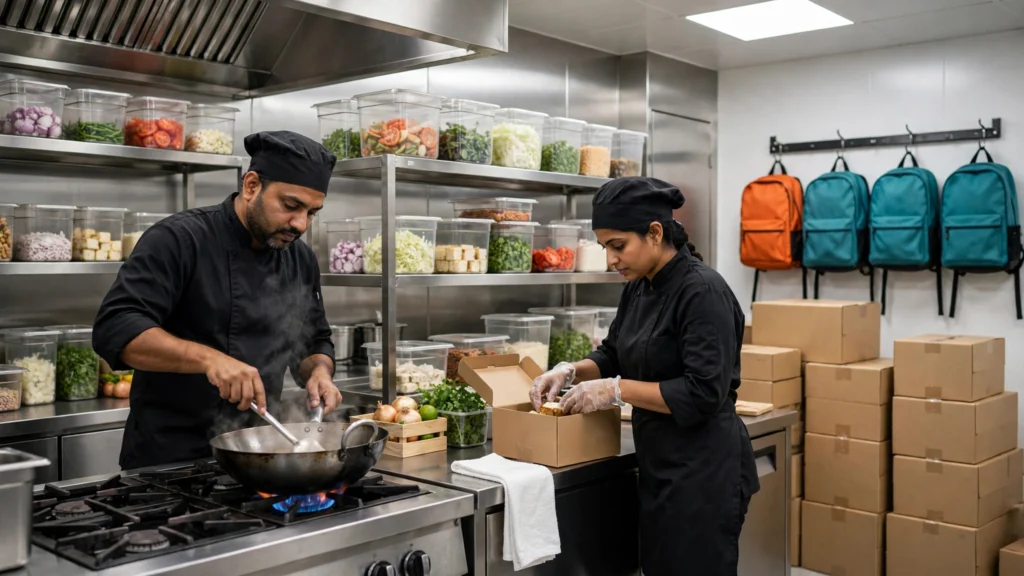
A cloud kitchen (also called a dark kitchen or ghost kitchen) cooks food only for delivery and takeaway. There are no tables, waiters or expensive high-street rent. Customers order through food-delivery apps, your own website or WhatsApp, and a delivery partner picks the order up from your kitchen.
Because you don’t pay for a prime location, the money that would have gone into rent and interiors can go into better ingredients, packaging and marketing. That’s why cloud kitchens have become one of the most popular food businesses for first-time founders, home chefs and existing restaurants that want to add new brands.
Types of cloud kitchen models
| Model | How it works | Best for |
| Home-based kitchen | Cooking from your home kitchen with basic upgrades | Home chefs testing a menu with low investment |
| Single-brand kitchen | One rented kitchen, one brand, one cuisine | First-time founders with a clear niche |
| Multi-brand kitchen | One kitchen running 2–5 brands (e.g. biryani, rolls, desserts) | Owners who want to use the same staff and space better |
| Shared/aggregator kitchen | Renting a fitted station inside a larger kitchen space | Founders who want to start fast without building a kitchen |
| Franchise kitchen | Running a known brand’s menu under a franchise agreement | People who prefer a tested system over building a brand |
Step-by-step: how to start a cloud kitchen
1. Choose a narrow cuisine and menu
The most common mistake is a long menu. Pick one category people order often and that travels well: biryani, North Indian thalis, rolls and wraps, South Indian meals, healthy bowls, or desserts. A focused menu of 15–25 items reduces wastage, speeds up cooking and makes your brand easier to remember.
2. Pick the right location
For a cloud kitchen, location means delivery radius, not footfall. Look for an area with dense residential societies, offices or colleges within 4–6 km. Check how many competitors in your cuisine already deliver to that area on the apps, and what they charge.
3. Get your licences and registrations
- FSSAI: From 1 April 2026, FSSAI raised the turnover limit for basic registration to ₹1.5 crore (from ₹12 lakh). Businesses up to ₹50 crore need a State licence, and those above ₹50 crore need a Central licence. FSSAI has also announced that registrations and licences will have perpetual validity, so periodic renewal is no longer required. Apply on the FoSCoS portal (foscos.fssai.gov.in).
- GST registration: Food-delivery platforms generally require a GSTIN to list you. Read our guide on GST registration for small businesses.
- Local trade/health licence from your municipal corporation or panchayat.
- Fire safety NOC, depending on your kitchen size and your state’s rules.
- Udyam registration (free) to get recognised as an MSME.
- Trademark for your brand name if you plan to grow or franchise.
4. Set up the kitchen
You need commercial burners, a refrigerator and deep freezer, exhaust and chimney, work tables, storage racks, utensils, a packaging station and a billing/POS system. Buying good second-hand equipment can cut setup cost a lot.
5. List on delivery platforms
Register on Swiggy and Zomato with your FSSAI number, GSTIN, PAN, bank details and menu with photos. You can also reach customers through ONDC-connected buyer apps, which can mean lower commissions. Good food photos and a clear menu description have a direct effect on orders.
6. Build repeat customers
Add a small thank-you note and a WhatsApp number inside every order. Over time, direct orders through WhatsApp or your own website save you the platform commission on that customer.
How much does a cloud kitchen cost in India?
The figures below are indicative ranges for a small single-brand kitchen in a Tier-1 or Tier-2 city. Actual costs vary widely by city, equipment quality and menu.
| Cost item | Indicative range (₹) |
| Kitchen rent deposit (200–400 sq ft) | 50,000 – 2,00,000 |
| Kitchen equipment | 2,00,000 – 5,00,000 |
| Exhaust, gas line, electrical and civil work | 50,000 – 2,00,000 |
| Licences and registrations | 10,000 – 50,000 |
| POS software, tablets and internet | 20,000 – 60,000 |
| Branding, packaging design and photos | 30,000 – 1,00,000 |
| Initial raw material and packaging stock | 50,000 – 1,50,000 |
| Working capital for 3 months (rent, salaries, marketing) | 2,00,000 – 4,00,000 |
| Total | roughly ₹6 – 17 lakh |
A home-based kitchen can start for far less, often under ₹1 lakh, if you already have most of the equipment.
Is a cloud kitchen profitable? A simple example
Delivery platforms charge a commission on each order, and commissions differ by city, contract and whether you take their delivery service. Many restaurants report commissions in the 20–30% range, so check the exact figure in your contract.
Here’s a simple monthly example with assumed numbers:
| Item | Amount (₹) |
| 40 orders a day × ₹300 average order × 30 days | 3,60,000 revenue |
| Food and packaging cost (35%) | 1,26,000 |
| Platform commission (25%, assumed) | 90,000 |
| Rent, electricity and gas | 40,000 |
| Salaries (2–3 staff) | 45,000 |
| Marketing and discounts | 20,000 |
| Profit before tax | ≈ 39,000 (about 11%) |
The lesson: margins are thin when most orders come through apps. Owners who grow profit do three things: they keep food cost below 30–35%, raise the average order value with combos, and move loyal customers to direct ordering.
Common mistakes to avoid
- Starting with a 60-item menu.
- Running heavy discounts without knowing your per-order cost.
- Ignoring packaging. Soggy or leaking food brings bad ratings.
- Not tracking ratings and reviews every day.
- Underestimating working capital. Platform payouts come weekly, but suppliers want payment now.
Frequently asked questions
Can I start a cloud kitchen from home in India?
Yes. Many home chefs start from home with FSSAI registration and later move to a rented kitchen. Check your housing society rules and local municipal requirements before you start.
Which FSSAI licence does a cloud kitchen need?
From 1 April 2026, a business with annual turnover up to ₹1.5 crore needs basic FSSAI registration, up to ₹50 crore a State licence, and above ₹50 crore a Central licence. Apply on the FoSCoS portal.
Is GST mandatory for a cloud kitchen?
Food-delivery platforms usually ask for a GSTIN before listing you, so in practice most cloud kitchens register for GST.
How long does it take to break even?
It depends on order volume and costs. Many small kitchens aim to break even within 12–24 months, but this varies widely.
Can one kitchen run multiple brands?
Yes. Multi-brand kitchens are common. Each brand usually needs its own listing on delivery apps. Check the platform’s rules and your FSSAI registration details.
Sources (checked 28 October 2026)
- FSSAI press release on licensing reforms and revised turnover thresholds, 13 March 2026: fssai.gov.in
- FoSCoS portal: foscos.fssai.gov.in
Suggested internal links: Food processing business ideas for rural India · GST registration guide · Diwali and wedding season business ideas